
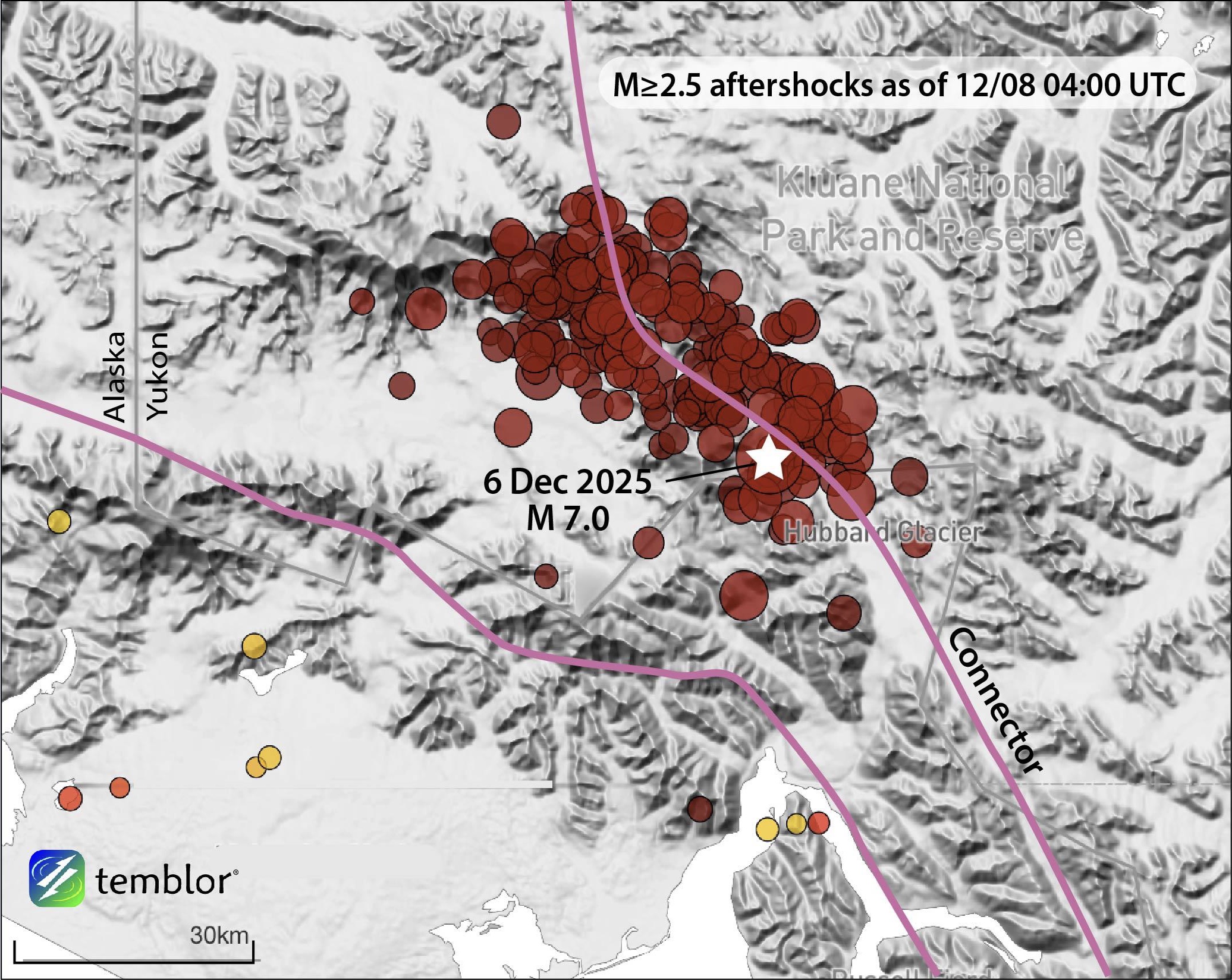
Figure 5. In the 24 hours since the magnitude 7.0 struck, the aftershock zone extended to 50 kilometers. The largest aftershock as of this writing is a magnitude 5.8 quake. These attributes are typical for an event of this size. Earthquakes are from the USGS ANSS catalog. Credit: Temblor, CC BY-NC-ND 4.0

Alka Tripathy-Lang is a freelance science writer based in Chandler, Arizona, and holds a Ph.D. in geoscience.
Latest posts by Alka Tripathy-Lang, Ph.D. (see all)
- Living through the Loma Prieta earthquake - October 21, 2021
- The Great Quake Debate: an interview with seismologist and author Susan Hough - August 27, 2020
- Salton Sea Swarm quiets down - August 12, 2020