
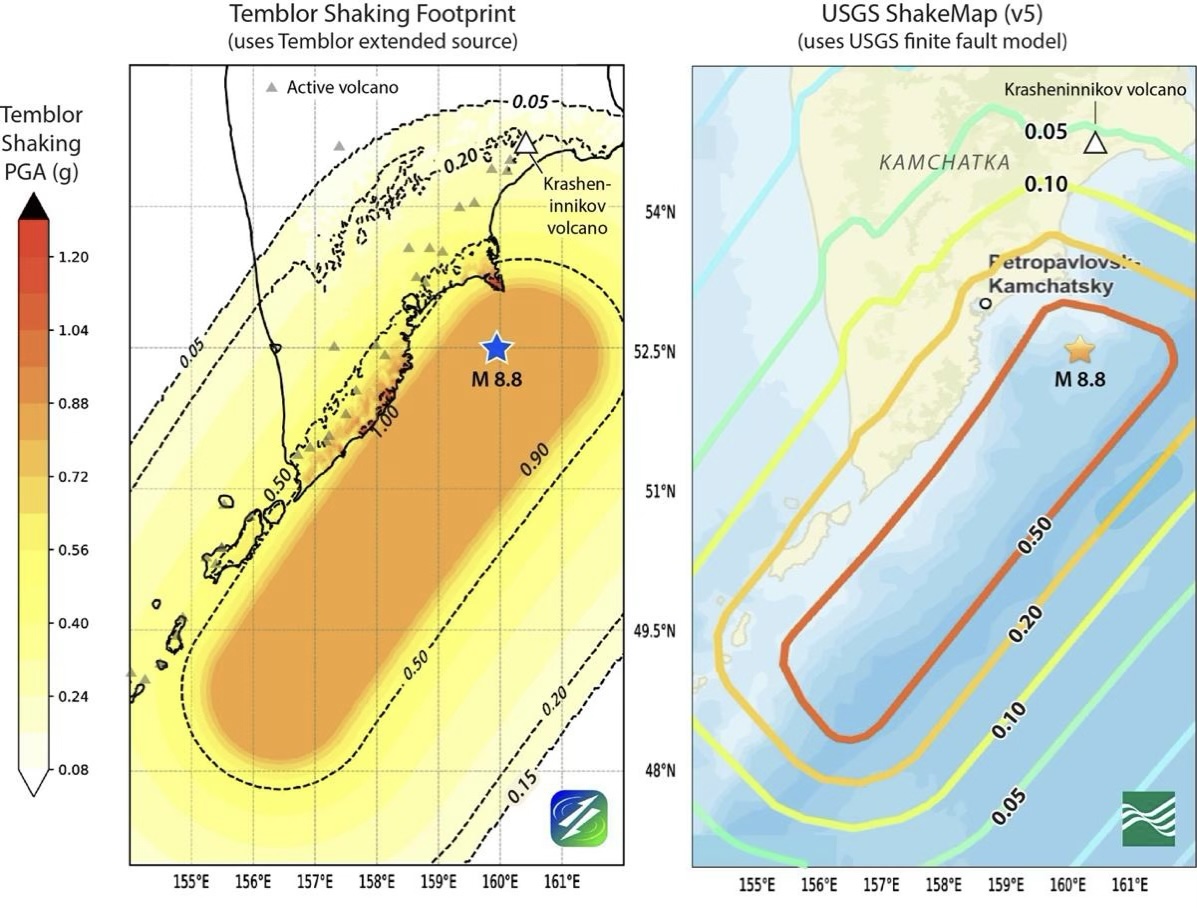
Figure 9. Shaking footprints by Temblor (left) and the USGS (right). In the absence of instrumental observation, both are models of the median shaking for an earthquake of this magnitude and rupture area. Between the two models, their patterns are similar, but Temblor has greater shaking. Credit: Temblor, CC BY-NC-ND 4.0

Alka Tripathy-Lang is a freelance science writer based in Chandler, Arizona, and holds a Ph.D. in geoscience.
Latest posts by Alka Tripathy-Lang, Ph.D. (see all)
- Living through the Loma Prieta earthquake - October 21, 2021
- The Great Quake Debate: an interview with seismologist and author Susan Hough - August 27, 2020
- Salton Sea Swarm quiets down - August 12, 2020