


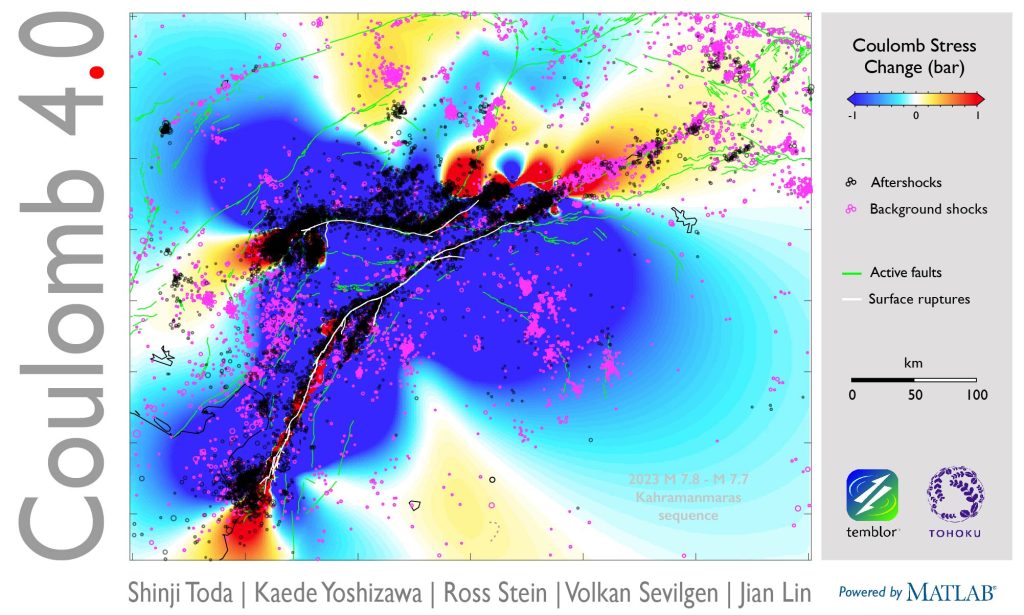
Coulomb 4.0 is open source MATLAB software designed for interactive exploration and visualization of earthquake and volcanic processes. The software can easily incorporate ancillary data, it integrates the ISC earthquake toolbox and USGS finite fault models, and produces publication-ready graphics.
By Kaede Yoshizawa, Tohoku University, Japan, Shinji Toda Tohoku University, Japan,
Ross S. Stein, Temblor, Inc., USA, Volkan Sevilgen, Temblor, Inc., USA, and Jian Lin, Southern University of Science and Technology, PRC
Citation: Yoshizawa, K., Toda, S., Stein, R. S., Sevilgen, V., Lin, J., 2026, Introducing Coulomb 4.0: Enhanced stress interaction and deformation software for research and teaching, Temblor, http://doi.org/10.32858/temblor.372
Faults converse with one another by the transfer of stress. This can occur in several ways. Static elastic stress changes are permanent. Viscoelastic stress is transmitted by flow in the lower crust. Poroelastic stress occurs through diffusion of fluids in the upper crust. Dynamic stress is carried by seismic waves excited by a mainshock; the imparted stresses are large but transient, disappearing in minutes to hours.
Coulomb 4.0, an updated version of Coulomb 3.4, enables exploration of the first — and we believe, the most important — of these interactions. One can quickly make idealized but realistic calculations, such as tapered slip on a rectangular patch with size appropriate for an earthquake magnitude. But more complex and detailed calculations are also possible, such as using USGS finite fault models, which break the fault plane into patches, each with its own amount of slip and rake (direction of slip).
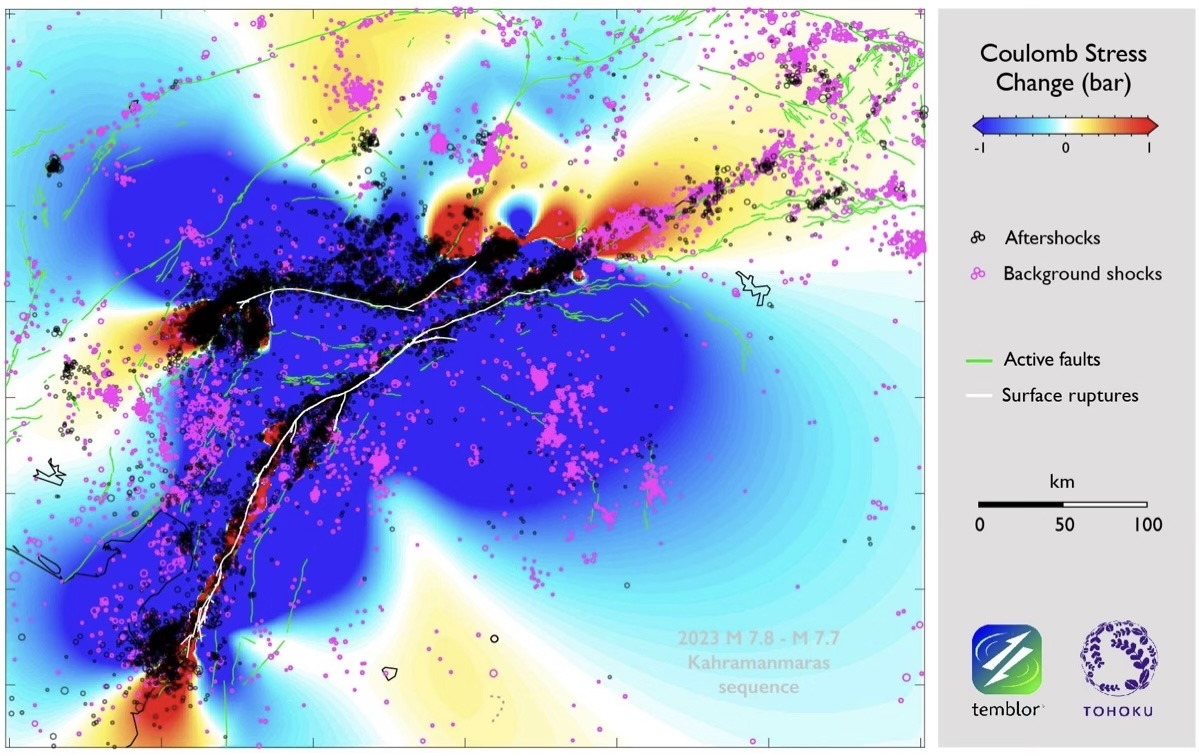
Coulomb 4.0 places the greatest emphasis on a user building their intuition and understanding by starting simply and progressing to more realism, all the while examining the results in 2D and 3D, in map view and cross-section (Figure 1).
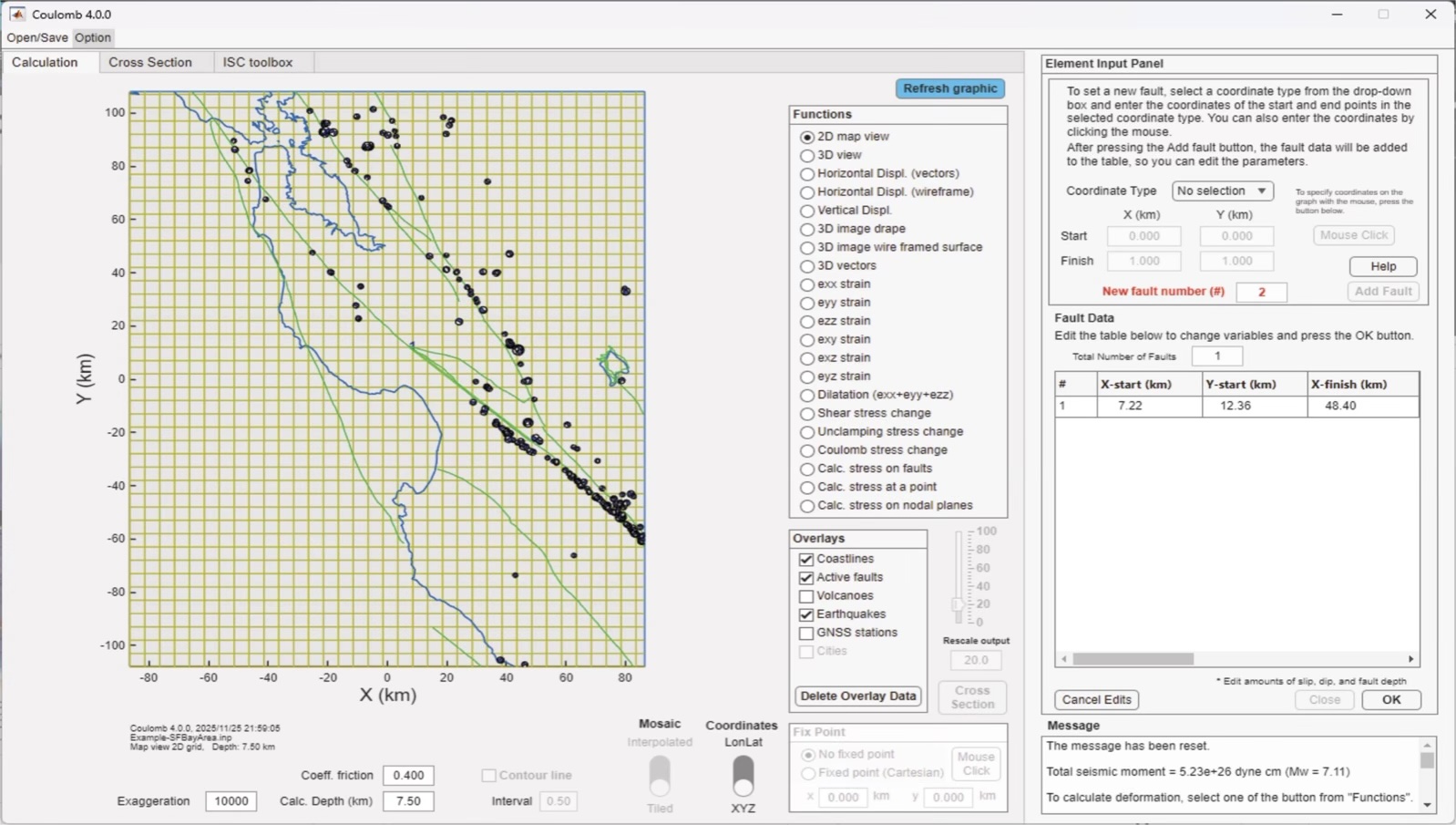
Coulomb 4.0 brings all modeling, earthquake catalogs, map overlays, and visualizations into a single, unified workspace. This eliminates pop‑ups and screen switching (perils from the previous version) so you can build sources and receivers directly on the map and iterate faster.
An ideal teaching tool
Simple tools make Coulomb 4.0 an ideal teaching platform to explore crustal deformation and stress transfer. The ability to build simple rectangular faults or dikes with tapered slip, and then examine the shear and normal stress they impart to their surroundings, in map view or cross-section, enable the user to develop valuable intuition and insights about stress transfer.
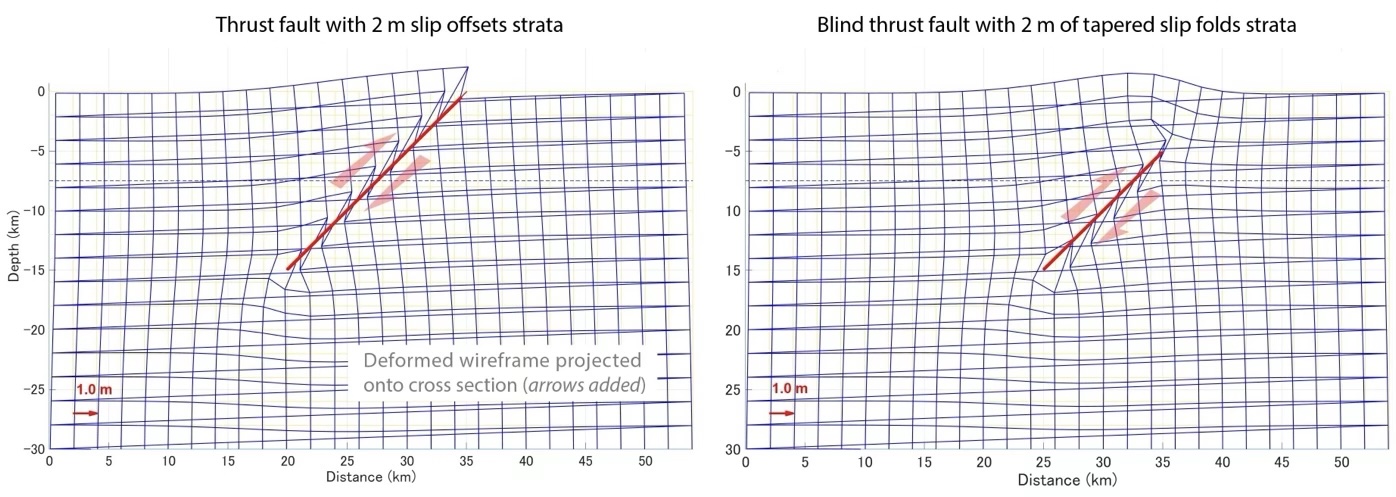
One can also use Coulomb 4.0 to explore concepts and features of crustal deformation. For instance, in Figure 2, we can see the impact on the upper crust of a thrust fault that cuts the surface (left panel) or is buried (right panel). A 45°-dipping fault has the greatest deformation asymmetry of deformation. A 45°-dipping thrust, as shown in Figure 2, produces the greatest net uplift; a 45°-dipping normal fault produces the greatest net subsidence.
An intuitive workspace
Coulomb 4.0 now uses a single workspace (Figure 3) that makes all options evident to the user. One can build source or receiver faults directly on the map, adding slip and rake — eliminating switching between screens, and so speeding and simplifying the analysis.
Incorporating the ISC Earthquake Toolbox
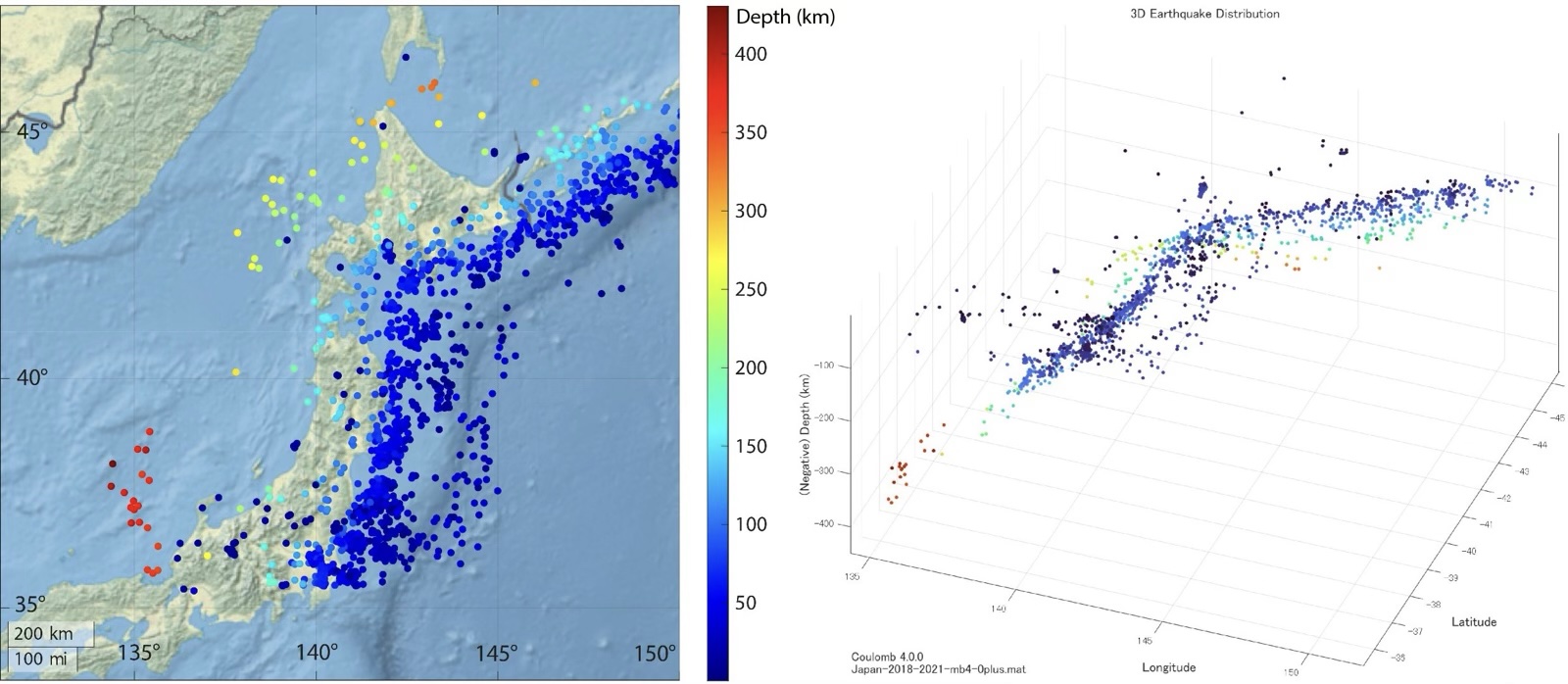
Coulomb 4.0 can access the ISC earthquake catalog directly in the workspace, so you can filter by time, magnitude, depth, and region. Earthquakes can be instantly plotted on stress change maps and in 3D to test whether seismicity corresponds to modeled stress changes (Figure 4).
Building fault sources and receivers
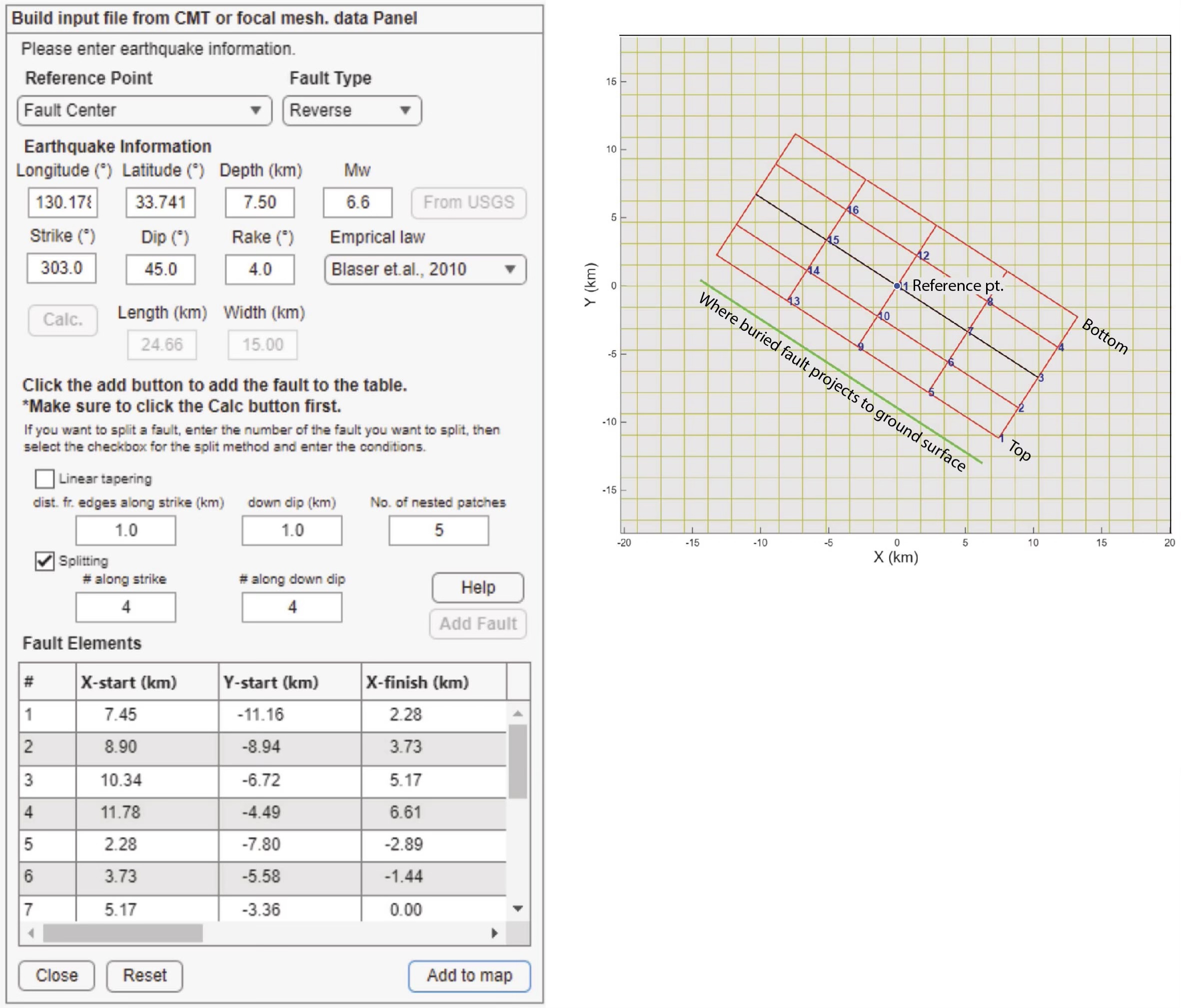
Fault sources and receivers can be built directly from centroid moment tensors (CMTs) or with map clicks. Coulomb 4.0 includes Blaser et al. (2010) or Wells & Coppersmith (1994) empirical scaling of magnitude to source dimensions and slip.
Tapering is valuable for source faults, providing more realistic stress transfer to nearby receiver faults. Tiling the fault surface is valuable when exploring receiver faults, so one can see how the stress varies over the fault surface. Coulomb 4.0 allows both (Figure 5)
Viewing results in different ways
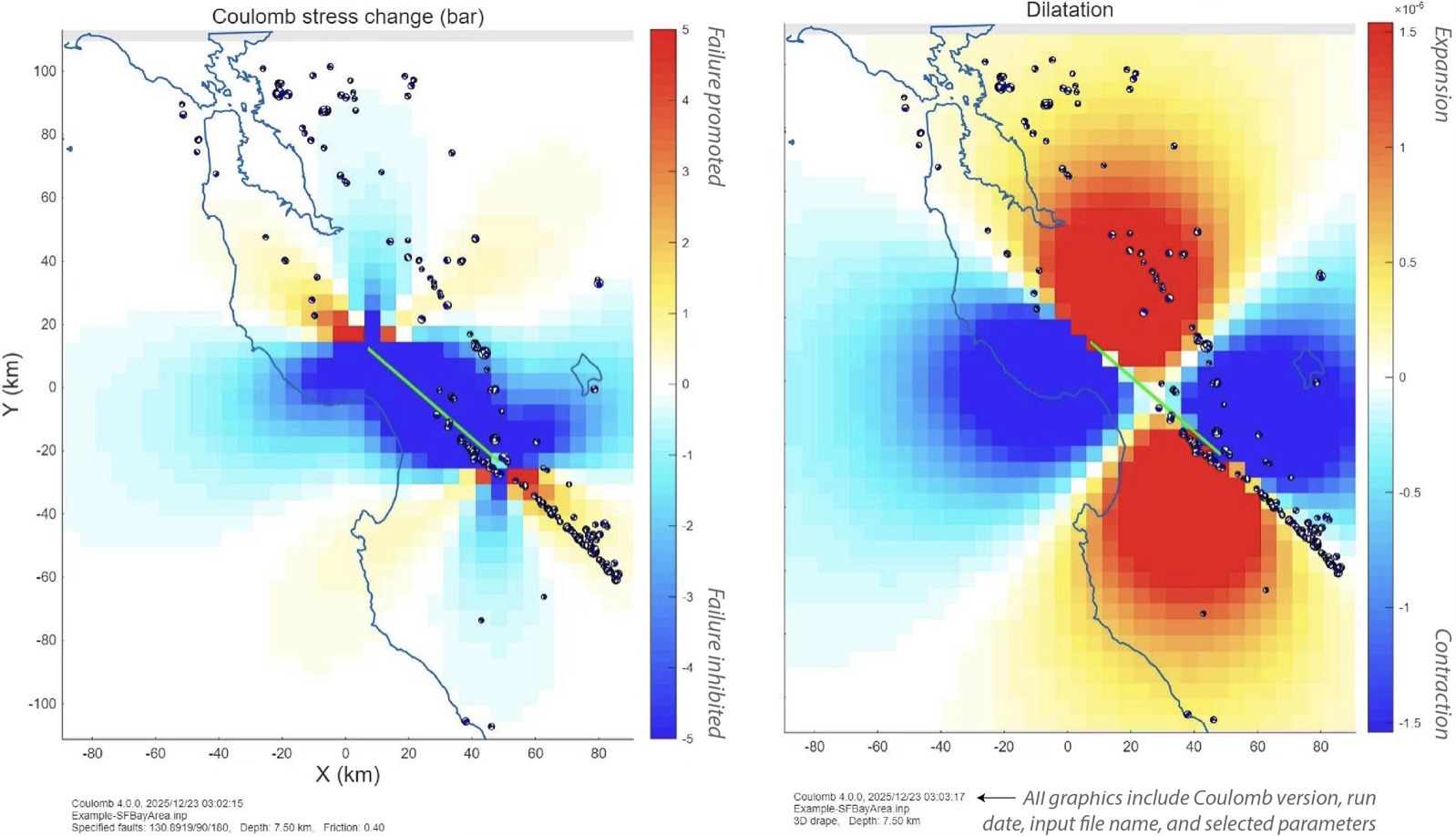
The clean, intuitive interface enables users to view and manipulate results. In particular, users can move between map (Figure 6), 3-D deformation, displacement vectors (Figure 7), wireframes, strain, and stress change views with ease. For example, in Figure 6, we show the stress imparted by a simplified source for the 1989 magnitude 6.9 Loma Prieta, California, earthquake. The left panel shows Coulomb stress, which may most affect fault creep and seismicity. The right panel shows dilatation, which may influence fluid diffusion.
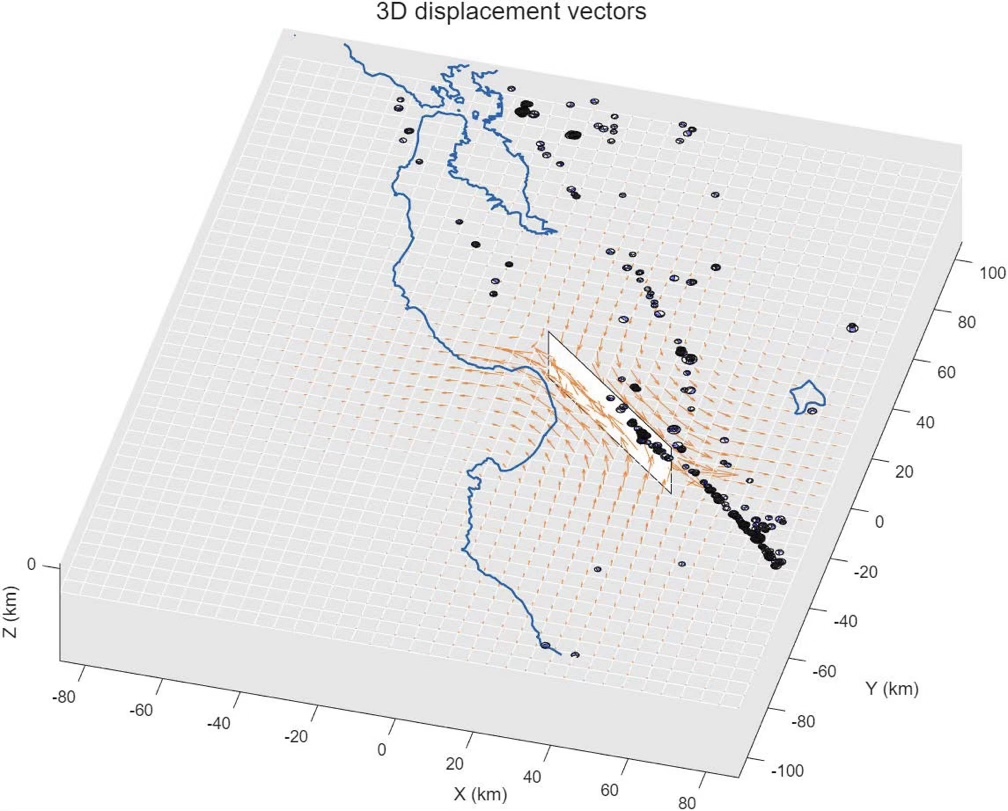
But note how, for the same example, plotting surface displacements on a regular grid reveals an arc-like pattern of vectors. One can also click any point to make it a reference (the point of zero displacement). In Coulomb 4.0, one can easily import the observed GPS displacements and compare them to the modeled vectors, enabling the user to develop intuition about displacement.
Stress change with depth
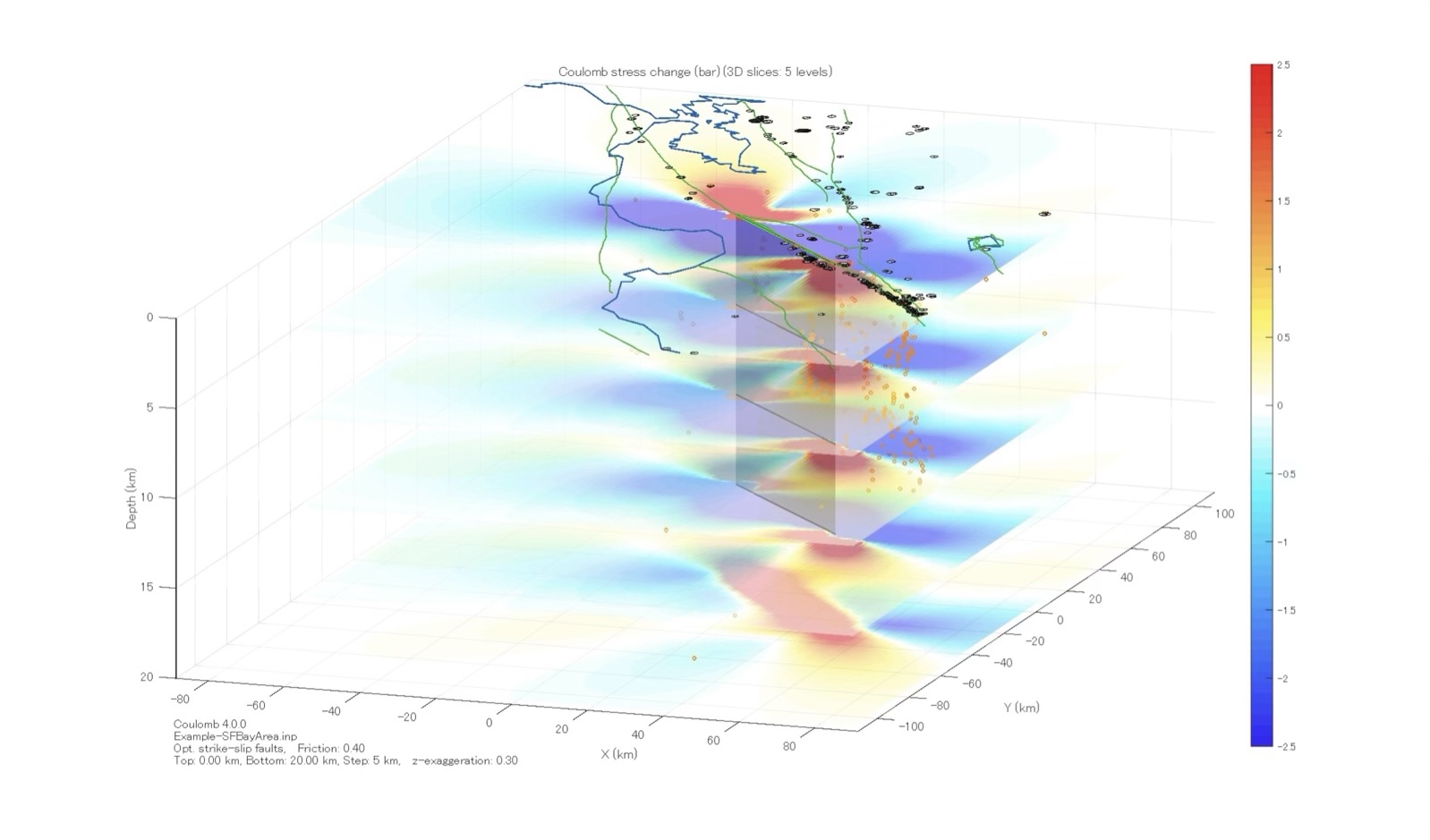
Through cross sections, Coulomb 4.0 can reveal stress change as a function of depth. In addition, a new depth-loop engine produces stress change at multiple depths. These new functions enable iso-surfaces, vertical slices, and horizontal slices (Figure 8) which can be helpful for understanding the 3D distribution of stress changes.
Imparting stress to nodal planes
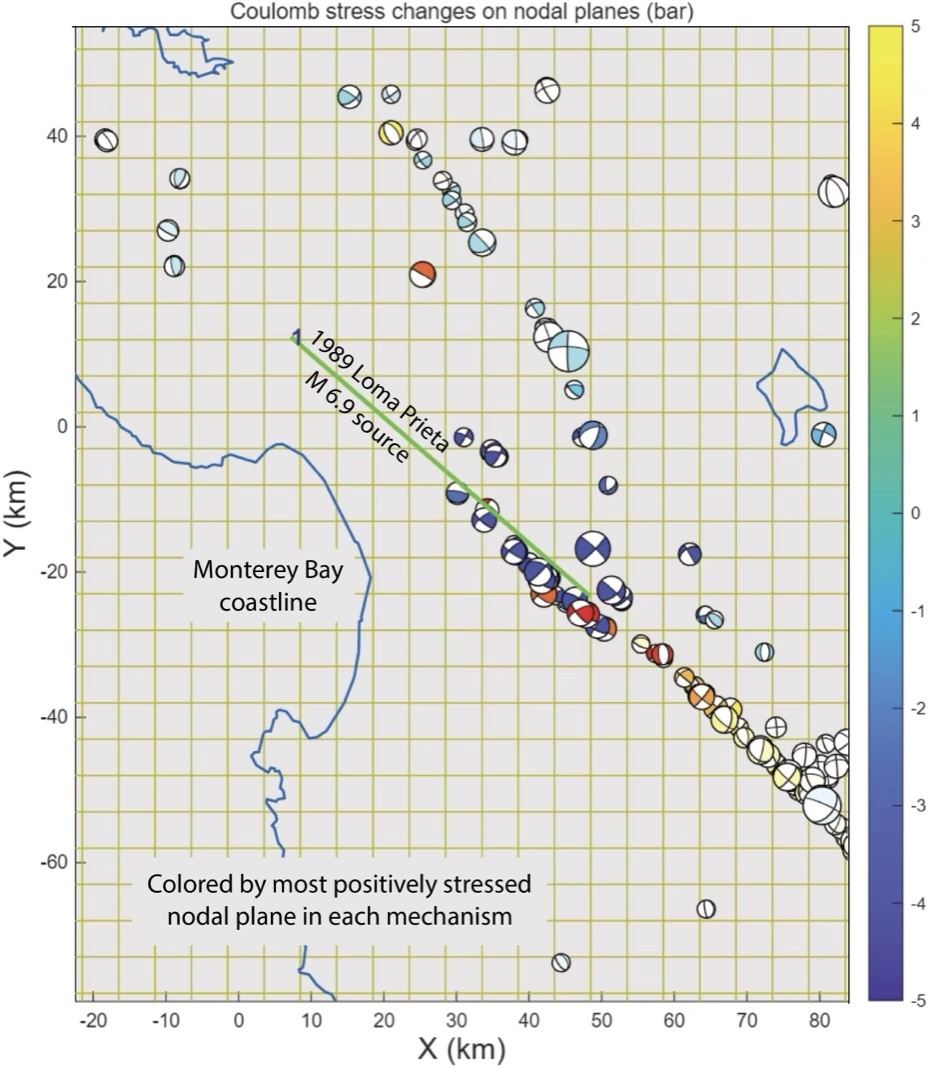
Faults, coastlines, and volcanoes can be easily overlain. To compare modeled stresses with observed rupture styles, earthquake catalogs can be filtered and sorted, with ‘beachballs’ (focal mechanisms or moment tensors) color-coded by stress change (Figure 9). The Coulomb stress will only be the same on both nodal planes if friction were zero. So, one can select and plot the most positively-stressed nodal plane, or Coulomb 4.0 can randomly select the nodal planes.
Animated swiveling GIFs are easy to make
Sometimes, seeing the fault geometry and slip, stress or seismicity from several angles reveals relationships hidden in 2D plots. To that end, Coulomb 4.0 allows users to make moving 3D images (Figure 10).

Figure 10. This GIF, which is easily created in Coulomb 4.0, shows the distribution of Coulomb stress imparted by the 2025 magnitude 8.8 Kamchatka rupture (the surface-cutting megathrust fault) to the fault plane of the largest aftershock (the smaller, deeper rectangle with a finer mesh), where the stress was generally increased by a few bars. Credit: Temblor, CC BY-NC-ND 4.0
No manual!
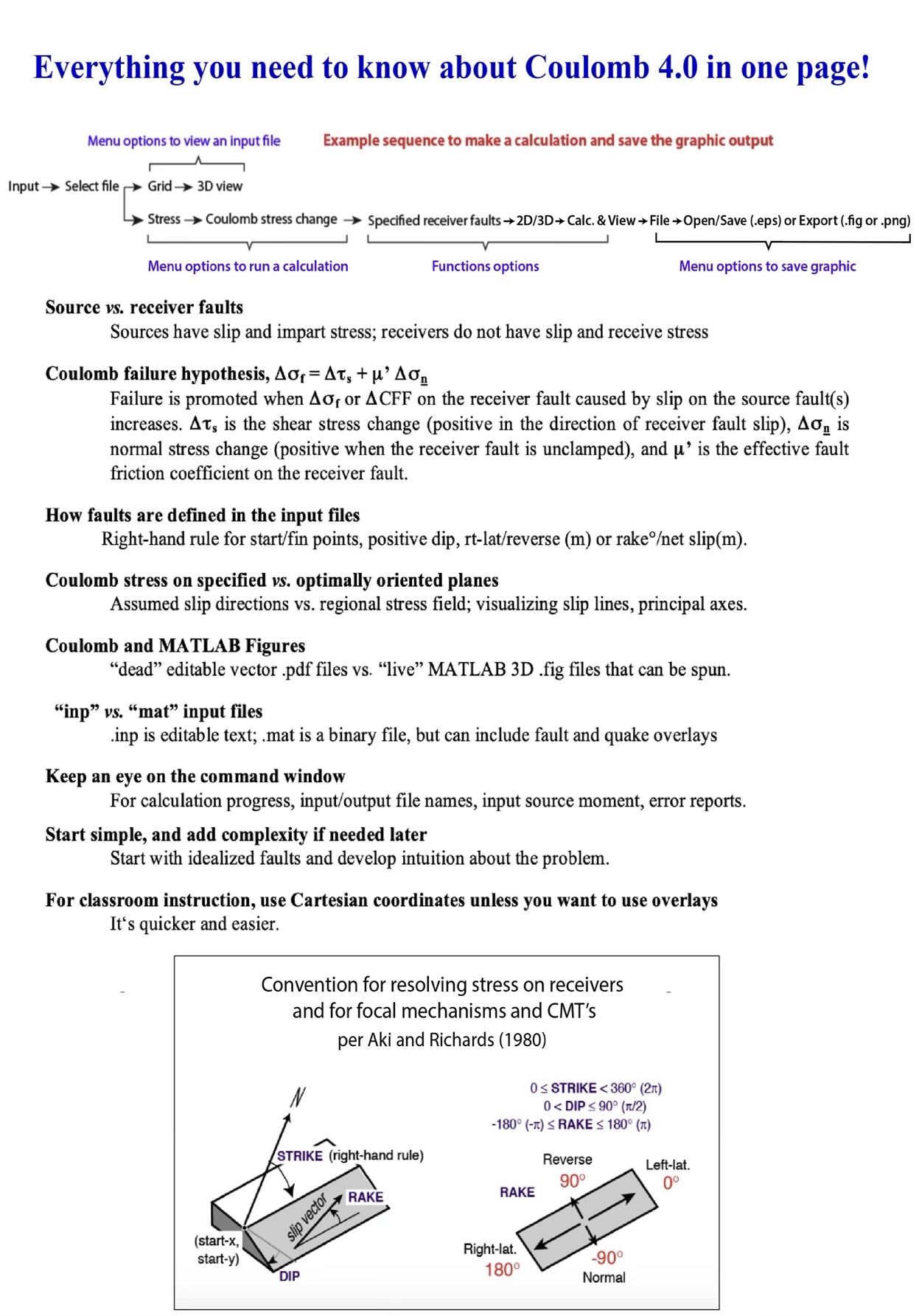
We have tried to show explanations on the screen as actions are taken. Otherwise, we have boiled it all down to one page (Figure 11).
Conclusion
Coulomb 4 uses the MATLAB Mapping Toolbox, the Image Processing Toolbox, and the Curve Fitting Toolbox. Most universities and some companies have MATLAB licenses. We hope Coulomb 4 will find its way into college classrooms, research groups, and journal publications. Its predecessor, Coulomb 3, has been downloaded 10,000 times and cited in 3,000 journal articles. We look forward to similar adoption of Coulomb 4.
Coulomb 4.0 download
https://github.com/YoshKae/Coulomb_Update
Acknowledgements
We thank MathWorks for a software development grant to Temblor, and Kostas Leptokaropoulos and Lisa Kempler from MathWorks for their invaluable guidance.
References
Blaser, L., Krüger, F., Ohrnberger, M., & Scherbaum, F. (2010). Scaling relations of earthquake source parameter estimates with special focus on subduction environment. Bulletin of the Seismological Society of America, 100(6), 2914-2926.
Wells, D. L., & Coppersmith, K. J. (1994). New empirical relationships among magnitude, rupture length, rupture width, rupture area, and surface displacement. Bulletin of the seismological Society of America, 84(4), 974-1002.
Copyright
Text © 2026 Temblor. CC BY-NC-ND 4.0
We publish our work — articles and maps made by Temblor — under a Creative Commons Attribution-NonCommercial-NoDerivatives 4.0 International (CC BY-NC-ND 4.0) license.
For more information, please see our Republishing Guidelines or reach out to news@temblor.net with any questions.